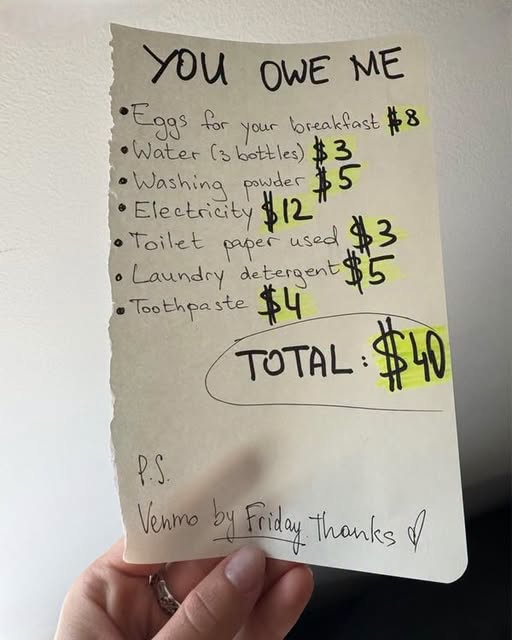
When my daughter-in-law asked me to babysit for the weekend, I expected nothing more than time with my grandson, Oliver—simple, joyful moments filled with laughter, bedtime stories, and the quiet satisfaction that comes from being needed. The weekend unfolded exactly that way. We built towers, cleaned spills, cooked meals, and navigated nighttime fears together. It was exhausting, but deeply fulfilling. I left their home feeling grateful, never imagining that what I had given would be measured in anything other than love.
The next morning changed everything. My phone buzzed with a photo of a handwritten bill left on their kitchen counter. It listed charges for eggs, water, electricity, detergent—every small item I had used during my stay. The total was modest, but the message behind it was not. It reduced my care, my time, and my presence to something transactional. In that moment, I felt more than anger—I felt hurt. What I had given freely had been turned into something owed.
Instead of reacting emotionally, I chose a different path. I wrote my own note, mirroring hers in structure but not in spirit. I listed what I had given: patience, sleepless nights, meals prepared with care, emotional support, and unconditional love. I assigned symbolic values—not to demand payment, but to reflect what cannot truly be priced. At the end, I made it clear that family should never operate like a ledger. Love is not a service, and care is not a transaction.
That note sparked difficult but necessary conversations. Beneath the conflict were deeper issues—stress, miscommunication, and unspoken expectations. Over time, we began to understand each other better. Boundaries were clarified, appreciation was expressed more openly, and our relationship slowly healed.
Looking back, the situation became more than a disagreement—it became a turning point. It taught us that respect and gratitude must be spoken, not assumed. And most importantly, it reminded us that while life can become transactional, family should never be.
Leave a Reply