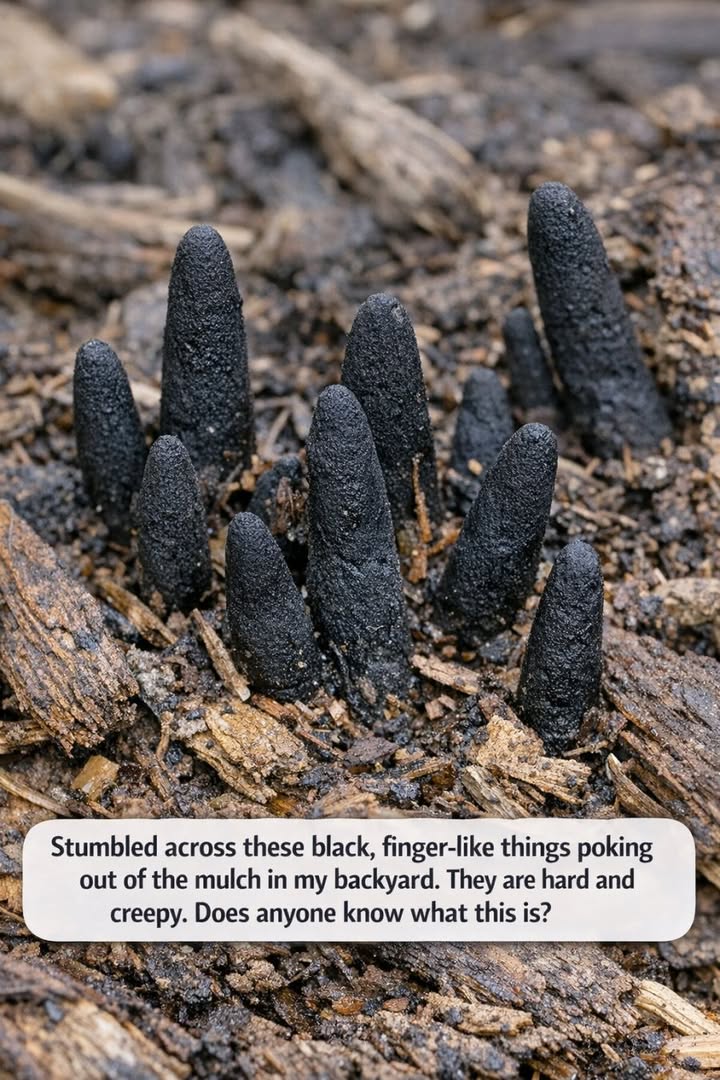
Found Creepy Black “Fingers” in Your Garden …Here’s What They Really Are
Spotting strange, black, finger-like growths poking out of your garden mulch can feel like something straight out of a horror movie. It’s the kind of discovery that makes you stop, stare—and maybe take a cautious step back.
But before you panic, here’s the truth: what you’re seeing is most likely a fascinating (and harmless) fungus with an eerie nickname—Dead Man’s Fingers.
Let’s take a closer look at what it is, why it appears, and what you should do if it shows up in your yard.
Why These Growths Look So Disturbing
At first glance, these fungi are undeniably creepy.
They typically appear as:
Black or dark brown “fingers” emerging from the soil
Roughly 3–4 inches tall
Clustered together like a hand rising from the ground
As they mature, they transform from pale, soft growths into dark, woody structures—making them even more striking against light-colored mulch.
It’s no surprise they’ve earned such a dramatic name.
Meet “Dead Man’s Fingers”
Scientifically known as Xylaria polymorpha, this fungus thrives on decaying wood.
You’ll often find it:
In garden beds with wood chips or mulch
Near tree stumps or buried roots
In damp, shaded areas
Rather than being harmful, it actually plays an important role in nature—breaking down dead organic matter and recycling nutrients back into the soil.
How to Identify It with Confidence
If you want to be sure what you’re looking at, check for these key features:
Finger-like, upright shapes
Dark brown to black coloring when mature
Smooth outer surface
White interior if cut open
Growth emerging from buried or rotting wood
They often grow in clusters, which adds to their “hand-like” appearance.
Why It’s Appearing in Your Garden
Dead Man’s Fingers doesn’t show up randomly—it’s a sign of specific conditions:
Plenty of decaying wood (like mulch or old roots)
Moist soil
Shady areas with limited sunlight
Spring and autumn are especially common times to see it, thanks to ideal moisture and temperature levels.
Is It Dangerous?
Despite its unsettling look, this fungus is completely harmless.
❌ Not toxic to touch
❌ Not dangerous to pets
❌ Doesn’t harm living plants
It’s not edible, but it’s also not a threat. In fact, it’s quietly helping your garden by breaking down organic material.
What It’s Often Mistaken For
Because of its unusual appearance, Dead Man’s Fingers is frequently confused with:
Stinkhorn fungi (which tend to be more colorful and soft)
Decaying roots or plant material
Other dark, clustered fungi
The key difference is its firm, woody texture and consistent finger-like shape.
Should You Remove It?
That depends on your preference.
You can leave it alone if:
You don’t mind the appearance
You want to support natural decomposition in your soil
You might remove it if:
It bothers you visually
It’s appearing in large clusters
Either way, it’s not harmful.
How to Remove It Safely
If you decide to get rid of it:
Wear gloves
Gently pull out the visible growths
Remove any underlying decaying wood if possible
Dispose of it in yard waste or compost
Keep in mind: if the food source (rotting wood) remains, it may come back.
Can You Prevent It?
Yes—by changing the conditions it thrives in:
Reduce or replace wood-heavy mulch
Improve drainage in damp areas
Turn mulch regularly to speed up decomposition
Increase sunlight exposure where possible
These steps make your garden less inviting for this type of fungus.
When to Call an Expert
If you’re unsure what you’re dealing with—or if you notice widespread fungal growth—it’s worth consulting a local expert or mycologist.
They can confirm the identification and rule out anything potentially harmful.
Turning “Creepy” Into Curiosity
Discoveries like this can feel unsettling at first—but they’re also a reminder of how much is happening beneath the surface in your garden.
Fungi like Dead Man’s Fingers are part of a hidden ecosystem, quietly recycling nutrients and supporting plant life.
So while it may look like something out of a spooky story, it’s actually just nature doing its job.
Final Thoughts
Those strange black “fingers” in your mulch might look alarming—but they’re harmless, natural, and even beneficial.
Sometimes, the creepiest-looking things in your garden turn out to be the most interesting.
Leave a Reply