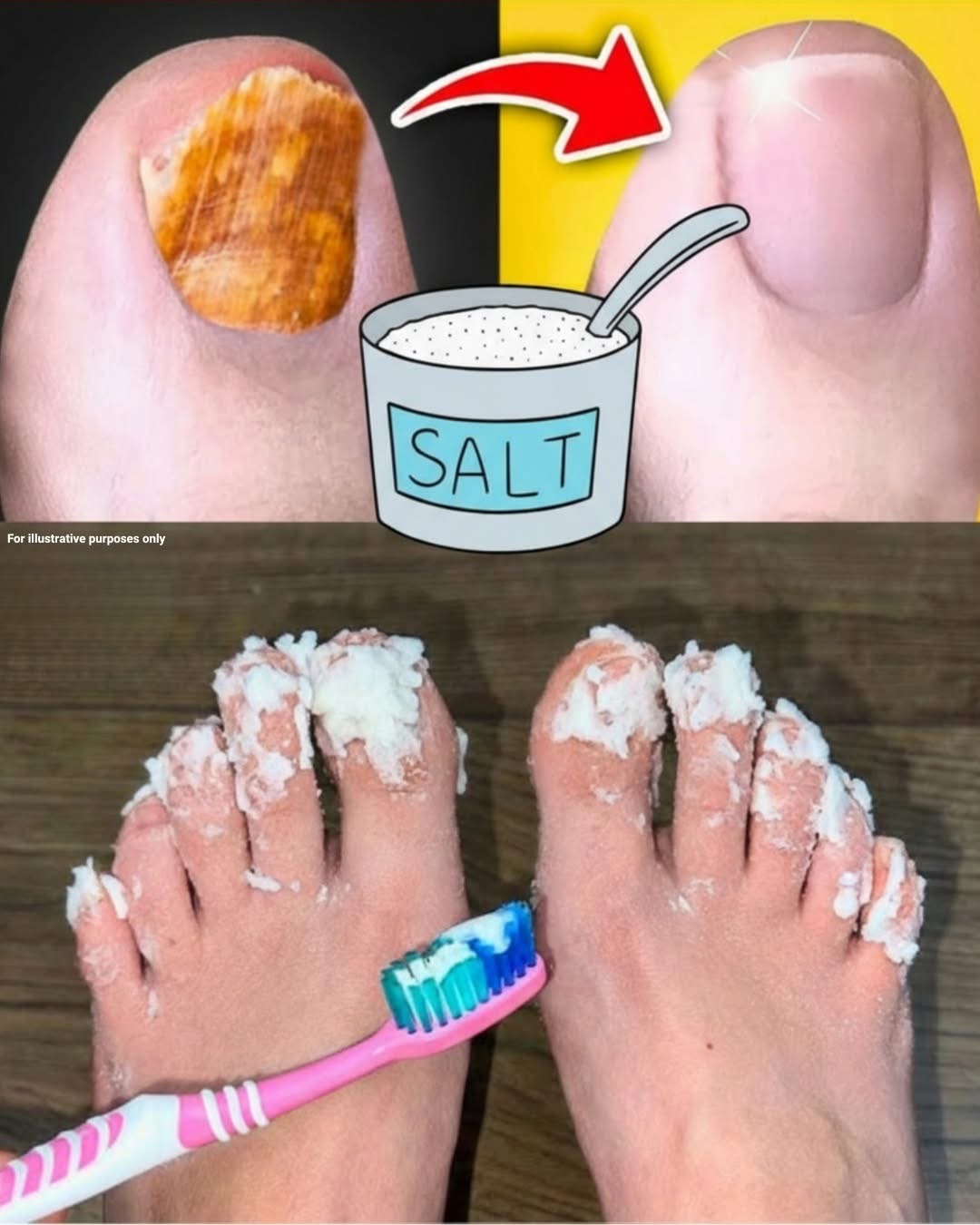
Nail fungus (onychomycosis) can be stubborn, unsightly, and frustrating. While over‑the‑counter antifungal treatments are widely available, many people prefer more natural approaches. Among these, salt and lemon are often cited for their antimicrobial properties.
Below, we’ll explore how salt and lemon may help, practical ways to use them, their limitations, and when to see a professional.
1. Why Salt & Lemon Are Believed to Help
Salt’s Antifungal & Desiccating Action
Salt is hygroscopic — it draws moisture out. Fungi thrive in moist environments, so salt may help by dehydrating and inhibiting fungal growth (or at least limiting spread).
It can also act as a mild exfoliant of dead skin cells, potentially reducing fungal load on superficial layers.
Lemon’s Acidic & Antimicrobial Qualities
Lemon contains citric acid, which can create an acidic environment less favorable to fungal growth.
Some in vitro studies and folk remedies suggest lemon or citrus extracts can inhibit dermatophytes or Candida species.
However, lemon juice is not a proven cure in human trials — it may help as a complementary measure but is unlikely to eradicate a deep infection by itself.
That said, it’s reasonable to use these ingredients as adjuncts, so long as you understand their limitations.
2. Salt & Lemon Remedies You Can Try
Here are a couple of home‑remedy ideas. Always do a patch test if you have sensitive skin.
Leave a Reply