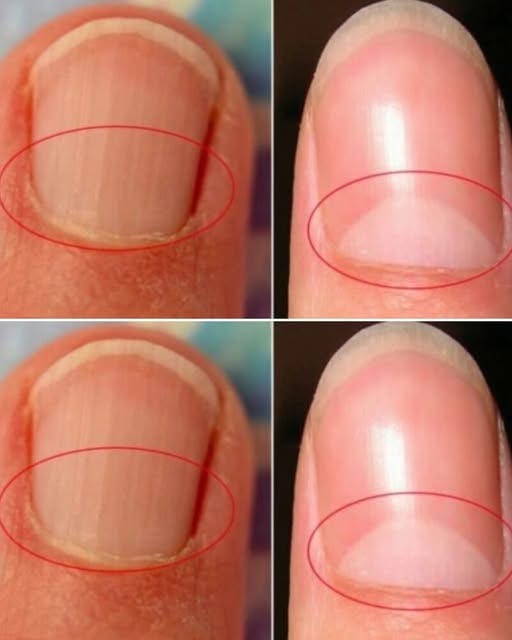
You might have noticed it in passing without giving it much thought. That little white crescent shape at the base of your nail—the lunula—has been drawing more curiosity lately.
Could it be a subtle mirror of your inner health? And should you be concerned if it disappears or starts to look different? The answer, in a word: context.
Despite its mysterious appearance, the lunula is actually pretty straightforward. It’s simply the visible part of the nail matrix—the area where your nail begins to grow. Its whitish color? That comes from a structure without visible blood vessels, unlike the rest of the pinkish nail bed.
For some people, the lunula is clearly visible, especially on the thumbs. For others, it’s barely noticeable—something that’s perfectly normal in most cases. It often fades with age or in children and doesn’t necessarily indicate any health issue. In fact, its appearance varies based on individual traits like skin tone, genetics… and even lighting conditions.
So no, a faint or hidden lunula isn’t a reason to panic. What matters more is how it changes over time or if something suddenly seems off—always keeping the bigger picture in mind.
Changes Worth Noting—Without Jumping to Conclusions
If you notice that your lunula takes up more space than usual—covering more than a third of the nail—it may be worth a closer look. Some interpret this as a potential sign of hyperthyroidism, high blood pressure, or cardiovascular stress. But that’s only relevant if it affects several fingers and persists over time.
A lunula that seems to vanish entirely? It might be linked to chronic fatigue, low iron, or a vitamin B12 deficiency. Still, caution is key: don’t jump to conclusions based on a single nail.
Color changes—bluish, gray, purplish, or even reddish tones—could suggest poor blood oxygenation, a reaction to medication, or simply… being cold. Artificial lighting or numb hands can also play tricks on the eye. However, if the unusual color sticks around, it’s best to consult a doctor.
Leave a Reply