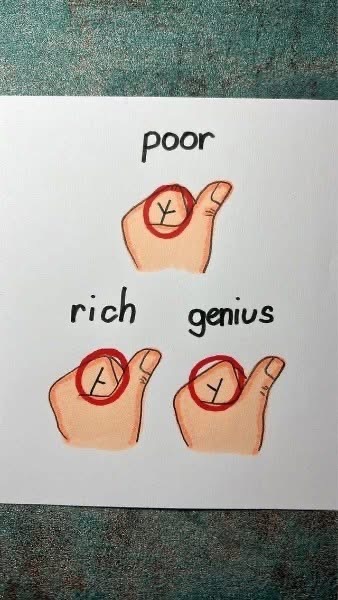
Have you ever looked at your hand and wondered what secrets it might hold? A viral trend sweeping across social media suggests that the lines on your thumbprint—specifically the shape of a “Y” inside the pad of the thumb—could reveal hints about your future. From wealth to intelligence, people are buzzing about what this thumb line might mean.
Shared by accounts like @condsty, the thumb chart divides personalities into three categories based on the position and symmetry of the “Y” shape
Poor: If the “Y” appears low and unbalanced
Rich: If the “Y” is high and symmetrical
Genius: If the “Y” is centered, wide, and strong
While the chart may not be backed by scientific data, it taps into a longstanding human fascination: Can physical traits predict your destiny? Let’s explore this viral sensation, its origins, the psychology behind why it resonates, and what science actually says about it.
What Is the Thumb ‘Y’ Chart?
The chart in question displays an illustrated thumb with different “Y” patterns overlaying the central pad (the fleshy area of the thumb). According to the chart:
A low, tilted Y symbolizes instability or future hardship.
A high, well-aligned Y is interpreted as a sign of future wealth or success.
A bold, centered Y is associated with high intelligence or creativity.
This palmistry-style reading doesn’t rely on palm lines but focuses instead on thumbprint patterns, introducing a fresh spin on age-old fortune-telling practices. While it’s primarily being shared for entertainment purposes, it’s intriguing how many people are analyzing their thumbs and sharing photos online.
Why Are People So Drawn to These Charts?
At first glance, the chart seems whimsical. But its viral nature reveals something deeper: people are inherently curious about themselves, and any tool that promises insight—even loosely—is likely to draw attention.
Here’s why trends like this catch fire:
They feel personal: You examine your own body to receive information, which makes the insight feel intimate.
They’re easy to try and share: You don’t need special tools—just your thumb.
They reinforce positivity: Most categories offer flattering or exciting labels like “rich” or “genius.”
They provide social bonding: Sharing results with friends creates conversations, humor, and comparisons.
It’s the same reason that astrology charts, personality tests (like MBTI), and palm readings remain popular. These tools provide frameworks through which people interpret themselves, even if just for fun.
Leave a Reply